“As the evening shadows of the Millennial Day fall, the Angel who imprisoned Satan will unlock the ‘prison house’ of the ‘Bottomless Pit,’ and Satan will come forth embittered by his fierce confinement to vent his anger upon the people of God.”
Larkin, The Book of Revelation
“When the thousand years come to an end, Satan will be let out of his prison. He will go out to deceive the nations – called Gog and Magog – in every corner of the earth. He will gather them together for battle – a mighty army, as numberless as sand along the seashore” (Revelation 20:7-8 NLT).
This week, our study takes us back to the Book of Revelation. It’s hard to imagine how a rebellion is possible after 1000 years of the righteous reign of Christ on earth. Scripture teaches that an innumerable army will rebel against Him (Rev. 20:8). Hitchcock says, “The one-thousand-year reign of Christ will prove conclusively that we need a righteousness outside ourselves to live in relationship with a holy God – the very righteousness of Jesus Christ that God credits to all who will simply trust in His Son (2 Corinthians 5:21)” (The End, p. 433). Jeremiah says, “The heart is deceitful above all things and desperately wicked; who can know it?” (Jeremiah 17:9 NKJV). The wickedness of man’s heart will become especially evident at the end of the Millennium.
The name of the battle that ensues is Gog & Magog. This is not to be confused with the Ezekiel 38-39 war called by the same name. We know these are different wars because the Ezekiel battle involves specific nations, whereas the Revelation 20 war involves the whole world. Hitchcock says one explanation of why these wars have the same name “is to view the two uses of Gog & Magog like World War I and World War II” (The End, p. 434).
“The similarity is that this, too, will be an invasion of Israel. The work of deception will be massive, and a worldwide revolt will begin to form. Eventually, millennial Israel will be invaded, and Jerusalem will be surrounded by these deceived Gentile armies. But once these armies arrive at the mountain of Jehovah’s house, they will be quickly dispensed with fire out of heaven, destroying them massively and suddenly (v. 9)” (Fruchtenbaum, The Footsteps of the Messiah, p. 496).
“And I saw them as they went up on the broad plain of the earth and surrounded God’s people and the beloved city. But fire from heaven came down on the attacking armies and consumed them. Then the devil, who had deceived them, was thrown into the fiery lake of burning sulfur, joining the beast and the false prophet. There they will be tormented day and night forever and ever” (Revelation 20:9-10 NLT).
“The archenemy of God and humanity who first entered in Genesis 3 in the Garden of Eden will exit in Revelation 20, cast into the lake of fire forever.”
Hitchcock, The End, p. 434
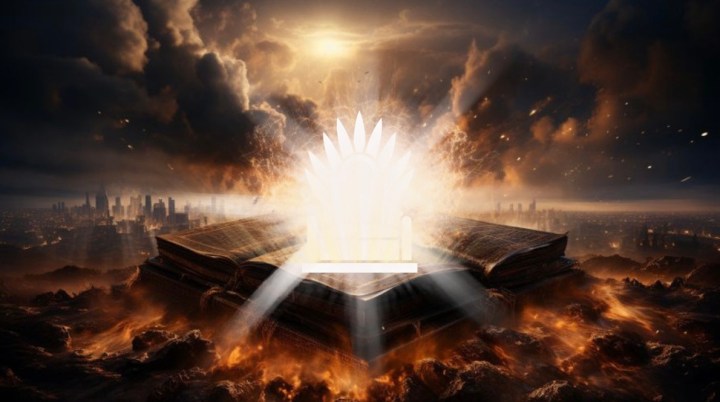
After Satan is cast into the lake of fire, the final great judgment will take place. This is known as The Great White Throne Judgment where the unrighteous dead will be judged (seen in Revelation 20:11-15). “The purpose of this judgment will not be to determine whether a person is saved, for that has been settled forever one way or the other at death. The purpose of this judgment will be to determine the degree of punishment” (Fruchtenbaum, The Footsteps of the Messiah, p. 497).
“And I saw a great white throne and the One sitting on it. The earth and sky fled from His presence, but they found no place to hide. I saw the dead, both great and small, standing before God’s throne. And the books were opened, including the Book of Life. And the dead were judged according to what they had done, as recorded in the books” (Revelation 20:11-12 NLT).
Hitchcock explains this judgment as “the ultimate courtroom drama” (The End, p. 437). “The scene before John is very similar to that which Daniel saw in his night vision” (Precept Austin).
“I watched as thrones were put in place and the Ancient One [Ancient of Days in other translations] sat down to judge. His clothing was as white as snow, His hair like purest wool. He sat on a fiery throne with wheels of blazing fire, and a river of fire was pouring out, flowing from His presence. Millions of angels ministered to Him; many millions stood to attend Him. Then the court began its session, and the books were opened.”
Daniel 7:9-10 NLT
Daniel’s vision involved God’s judgment of the Antichrist before the kingdom was given to Christ to reign for 1000 years. The Great White Throne Judgment, however, involves the final judgment of the wicked “to be judged by the One who died on behalf of the world to whom judgment has been given” (Precept Austin) (see John 5:22-23; Acts 17:30-31).
“Weigh each word. GREAT, – it is the infinite before whom the finite must stand; WHITE, – it is the unveiled, undimmed blaze of the divine holiness and purity and justice; THRONE, – it is majesty unlimited, in which inheres utter right to dispose of the destiny of creatures. Before such a throne, creatures cannot stand; but they shall stand – even the lost!”
Newell, Revelation: Chapter by Chapter, p. 328, emphasis added
At the onset of this judgment, “the old order of things gives up its dead and retreats in preparation for the creation of a new heavens and earth” (Precept Austin). The destruction of this earth commences with The Great White Throne Judgment. “A passing away of the old order will occur at the time of the judgment. The present heavens and earth, in existence since Genesis 1, will be done away with (v. 11b). That which was renovated for the millennium, but polluted all over again with man’s last revolt, will now be removed forever. This will leave all things ready for the judgment itself (v. 12). The judgment will pertain to all unbelievers of all time” (Fruchtenbaum, The Footsteps of the Messiah, p. 497).
“Jesus had predicted that God’s word would outlast the first heavens and earth
Precept Austin
(see Mat. 24:35).”
As the old order passes away, “in the process, the dead are given up to stand before the terrifying presence of God” (Precept Austin). This is the Second Resurrection and is described in Revelation 20:13, “The sea gave up its dead, and death and the grave gave up their dead. And all were judged according to their deeds” (NLT). The sentence of The Great White Throne Judgment is the Lake of Fire, known as the Second Death.
“Then death and the grave were thrown into the lake of fire. This lake of fire is the second death. And anyone whose name was not found recorded in the Book of Life was thrown into the lake of fire” (Revelation 20:14-15 NLT).
The “books” contain the record of every man’s deeds. The Book of Life, however, is separate. “This book is singled out from among the other books because of its importance. Unlike the books which record their works, this book records their faith, or lack thereof. The mere appearance of this book in the judgment is proof that access to God is by faith alone. For if salvation could be by works, the books recording their deeds would be sufficient for judgment” (Precept Austin). “The Book of Life is consulted to verify they have not trusted in Christ and therefore must stand before God on their own merit” (Precept Austin).
“The second resurrection will soon give way to the second death in the lake of fire, which will be the eternal abode of the lost.”
Fruchtenbaum, The Footsteps of the Messiah, p. 500
Up until the time of this judgment, non-believers who die go to a temporary holding place known in Scripture as Hades or Sheol. According to Luke 16:19-31, “Hades (or Sheol) had two compartments. One was for the unrighteous, and it could be called “hell” in the way we use that term today; it was indeed a place of torment (vv. 23-25, 28). The other compartment, where the righteous went, was known as “Abraham’s bosom” (v. 22); it was a place of comfort (v. 25), but it was not heaven. Elsewhere, the righteous portion of Sheol is called ‘paradise,’ as in Luke 23:43“ (Fruchtenbaum, The Footsteps of the Messiah, p. 501).
Fruchtenbaum continues, “While the body of Yeshua remained in the tomb, His soul went down into the paradise side of Sheol, announcing that the atonement had been made [see Ephesians 4:8-10, Luke 23:43]. At the time of His ascension, all the souls of the Old Testament saints were removed from Abraham’s bosom and brought into heaven. In this way, the righteous portion of Sheol was eliminated and is no longer in existence” (The Footsteps of the Messiah, p. 502). Because of Christ’s atoning work on the cross and His resurrection, when believers die, their souls go immediately into His presence. However, when unbelievers die, their souls go to hell (Hades) where they wait to be judged.
“At the time of the second resurrection, the bodies of the unsaved will be resurrected, and the souls of hell will be removed to be reunited with the bodies. At that time, the hell portion of Sheol will also be eliminated, because hell will not be the eternal abode of the lost. The lake of fire will be. Hell is a place of torment for the soul only, but the lake of fire will be a place of torment for both soul and body. Heaven, on the other hand, will not be the eternal abode of the believer, as the last two chapters of the Revelation reveal” (Fruchtenbaum, The Footsteps of the Messiah, p. 502).
The future that awaits the unbelieving dead is a sobering reality. I am reminded of the words of Jesus in Luke 12:4-5, “My friends, do not be afraid of those who kill the body, and after that have no more that they can do. But I will show you whom you should fear: Fear Him who, after He has killed, has the power to cast you into hell; yes, I say to you, fear Him!” (NLT).
“As wonderful as the Millennial Kingdom will be with many of God’s promises regarding Israel, the earthly Jerusalem, and the renovated earth coming to fulfillment, it is not the ultimate plan of God. After the Millennial Kingdom and the final rebellion of Satan, John saw the original earth and heaven flee away. In the process, the earth and sea gave up the dead who stood before God for judgment. During the Millennial Kingdom, sin and death had not yet been vanquished” (Precept Austin), but at the end of all things, we not only see Satan and the unbelieving dead thrown into the lake of fire, but death and the grave will be vanquished forevermore (Revelation 20:10, 13-15).
As we close this week’s study, if you are a believer, praise God that your name is permanently written in the Book of Life! If you are an unbeliever, today is the day of salvation! Call on the Lord while He may be found! Every breath we take is a merciful opportunity to respond to God’s gracious invitation of salvation.
“Seek the LORD while He may be found, call upon Him while He is near. Let the wicked forsake his way, and the unrighteous man his thoughts; let him return to the LORD, and He will have mercy on him; and to our God, for He will abundantly pardon.”
Isaiah 55:6-7 NKJV
Week 9 Homework Reflections:
- Read Revelation 20:7-9. What happens at the end of the Millennium? Read Jeremiah 17:9. What does this verse reveal about man’s heart? According to 2 Corinthians 5:21, what is the only thing that will fix the human heart?
- What happens to Satan in Revelation 20:10? Who does he join at his destination?
- Read Revelation 20:11-12. According to John 5:22-23 and Acts 17:30-31, who alone has the power to judge and why?
- Read Ephesians 4:8-10. What did Jesus accomplish while He was in the grave?
- Read Revelation 20:13-15. What is the result of The Great White Throne Judgment? What do you think is the significance of the Book of Life in this judgment? Read 2 Peter 3:10-12, Isaiah 51:6, and Psalm 102:25-26. How will the present earth be destroyed? What do you learn about the Lord in these passages?
- Take some time to read and meditate on 2 Peter 3:11-18. In knowing how the earth will one day be destroyed, how should that truth affect the way we live? What have you learned in Revelation 20:7-15 that adds to your understanding?
 Simply Persuaded