
“And now the LORD speaks – the One who formed Me in My mother’s womb to be His servant, who commissioned Me to bring Israel back to Him. The LORD has honored Me, and My God has given Me strength. He says, “You will do more than restore the people of Israel to Me. I will make You a light to the Gentiles, and You will bring My salvation to the ends of the earth.”
Isaiah 49:5-6 NLT
As we continue our study of the Millennial kingdom, this week, we will consider the place of the Gentiles in the kingdom. This is truly remarkable if you think about it. The Gentiles, who have always trampled Israel underfoot, will be given a place in the kingdom. Only saved Gentiles will enter the kingdom, and they will be the ones who populate the Gentile nations (Fruchtenbaum, The Footsteps of the Messiah, p. 471). This reveals the mercy and grace of God in that His salvation will continually be offered to their descendants throughout the Millennium. Fruchtenbaum points out several key elements regarding the Gentiles in Isaiah and Zechariah (see The Footsteps of the Messiah, p. 471-474).
- “The Messiah will be the center of Gentile attraction.” (Isaiah 11:10)
- “The Gentiles will be the servants of the people of Israel.” (Isaiah 14:1-2)
- The Gentiles “will receive justice from [the Messiah].“ (Isaiah 42:1)
- “Messiah will become the light to the Gentiles.” (Isaiah 49:5-7)
- “The Gentiles are to have a place in the Millennial Temple worship.” (Isaiah 56:1-8; 66:18-24)
- The Gentiles will be obligated to observe the yearly Feast of Tabernacles in the Millennium. (Zechariah 14:16-19)
If you have never studied the Jewish feasts and how they are fulfilled in Christ, I encourage you to do so! Here is an article by Got Questions to get you started. “All of the biblical feasts are prophetic; rich with symbolism and laden with spiritual nourishment for both Jews and Gentiles” (One For Israel Ministries). It is remarkable how God instituted these feasts and uniquely incorporated the Gentiles into the Feast of Tabernacles.
“The Feast of Tabernacles, also known as the Feast of Booths and Sukkot, is the seventh and last feast that the Lord commanded Israel to observe and one of the three feasts that Jews were to observe each year by going to “appear before the Lord your God in the place which He shall choose” (Deuteronomy 16:16). The importance of the Feast of Tabernacles can be seen in how many places it is mentioned in Scripture” (Got Questions). Historically, this feast was so popular in Israel that it became known as “the Feast.” Deuteronomy 31:10-12 shows that Gentiles were invited to participate. Israel was commanded to observe this feast by setting up temporary “booths,” or tents to remind them of their sojourn in the wilderness after God delivered them out of Egypt. God Tabernacled among the people and through His presence provided all of their needs. The Feast of Tabernacles will be fulfilled through Christ in the Millennial Kingdom.
“Now on the last day, the great day of the feast, Jesus stood and cried out, saying, ‘If anyone is thirsty, let him come to Me and drink. He who believes in Me, as the Scripture said, ‘From his innermost being will flow rivers of living water.’ But this He spoke of the Spirit, whom those who believed in Him were to receive; for the Spirit was not yet given, because Jesus was not yet glorified.”
John 7:37-39 NASB95
Interestingly, Jesus made this statement on the last day of the Feast of Tabernacles. That was not by mistake! Precept Austin says, “One reason for the Feast was to celebrate God’s good provision of “living water” during their 40 years of “wilderness wanderings.” It is notable that the OT descriptions of the “wilderness wanderings” state very clearly there was “NO WATER.” (Read Ex 15:22, 17:1, Nu 20:2, 21:5, 33:14, Dt 8:15). No water in the wilderness meant certain physical death in only a few days. God saw their physical need and provided for their physical need, “painting” a beautiful picture of His desire and ability to provide for their (and every man’s) spiritual need that they might not remain spiritually dead throughout eternity! Moses summarized the dry, desert times of Israel’s wandering, writing “He (Jehovah) led you through the great and terrible wilderness, with its fiery serpents and scorpions and thirsty ground where there was no water; He brought water for you (supernaturally) out of the rock of flint.” (Dt 8:15)” (Precept Austin).
“And all drank the same spiritual drink. For they drank of that spiritual Rock that followed them,
1 Corinthians 10:4 NKJV
and that Rock was Christ.”
“As Wiersbe says “At the feast, the Jews were reenacting a tradition that could never satisfy the heart. Jesus offered them living water and eternal satisfaction!” Could God have “painted the picture” more clearly? Even as Jesus was the Source of the physical water in the OT, He declares that He is the Source of the spiritual water in the NT. In so doing, He is showing that He is ultimate fulfillment of the Feast of Tabernacles! What a gracious, merciful, mighty God we are privileged to worship! And worship we will at the Millennial Feast of Tabernacles, celebrating the final ingathering of souls into His glorious Kingdom. Hallelujah! Hosanna! Maranatha! Amen!” (Precept Austin emphasis added).
Jesus, the very provision represented by the Feast of Tabernacles, offered Living Water to Israel, but they rejected Him. Paul tells us in Romans 11:11-12 that because of Israel’s unbelief, the Gentiles were grafted in! Israel’s rejection of Christ is not final because one day, as we have seen in our study, a remnant will be saved. In the Millennial kingdom, the Feast will see its grandest fulfillment when Jews and Gentiles alike will celebrate it with Jesus. I am so grateful to God for allowing the Gentiles into the Kingdom. What a mighty God we serve that He would include both Jews and Gentiles in His marvelous salvation.
Zechariah 14:16-19 says the Gentiles in the Millennial kingdom must observe the Feast yearly in Jerusalem. If any nation fails to participate in the Feast, “the rains will be withheld from her for that year (Zech. 14:17)” (Fruchtenbaum, The Footsteps of the Messiah, p. 474).
In addition to the Gentiles’ place in the Millennium, Scripture tells us what will become of the Arab states who have continually hated Israel throughout history. “This hatred that was to characterize the descendants of Ishmael and Esau began as early as Numbers 20:14-21 and has continued throughout the biblical period and into modern history. A passage that summarizes this attitude is Psalm 83:1-8“ (Fruchtenbaum, The Footsteps of the Messiah, p. 475). Here is a summary of what is prophesied to happen to the Arab States and surrounding Middle Eastern nations in the Millennium based on Fruchtebaum’s study on p. 475-488.
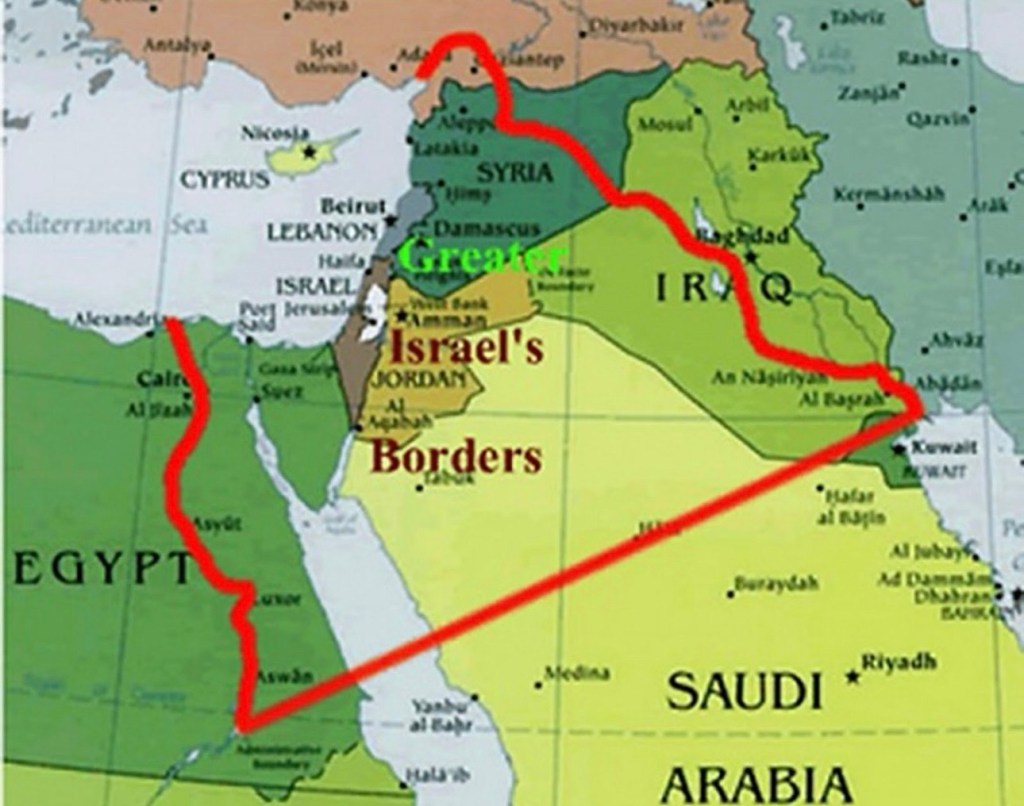
- Lebanon (Tyre): “The tracing of the northern boundary [in the Millennium] will show that Israel will encompass all of modern-day Lebanon” [see Ezekiel 47:13-48:29]. “Lebanon was always a part of the Promised Land, but it was the part that Israel never possessed. In the Messianic kingdom, there will be no nation called Lebanon, but it will be a part of millennial Israel” (Fruchtenbaum, The Footsteps of the Messiah, p. 475).
- Southern Jordan (Edom): “Edom will become a perpetual desolation” (Fruchtenbaum, p. 478, see also p. 490). See Ezekiel 35:6-15; Jeremiah 49:7-20; Obadiah 5-9, 17-21; Ezekiel 25:12-14; Isaiah 34:8-15; Joel 3:19.
- Central Jordan (Moab): Central Jordan is prophesied to suffer partial destruction, but those who survive will be saved and enter the Kingdom (Fruchtenbaum, p. 481; Jeremiah 48:47).
- Northern Jordan (Ammon): “Concerning Ammon, or modern northern Jordan, it, too, will suffer partial destruction and become a possession of Israel, as described in Jeremiah 49:1-2 [see also Jer. 49:6]” (Fruchtenbaum, p. 482).
- Egypt: “Peace will come between Israel and Egypt by means of conversion. Only when the Egyptians worship the same God as Israel, through Yeshua the Messiah, will peace finally come. For the first forty years of the millennium, the land of Egypt will be desolate, and the Egyptians will be dispersed all over the world. But afterward, they will be regathered, becoming a kingdom again” (Fruchtenbaum, p. 486). See Ezekiel 29:1-16.
- Northern Iraq (Assyria): One day northern Iraq will worship the God of Israel according to Isaiah 19:23-25 (see Fruchtenbaum, p. 486).
- Southern Iraq (Babylon): Babylon will be desolate and uninhabitable forever. “Not only is Babylon to be a desolate waste throughout the millennium, it will also be a place of continual burning and smoke… and confinement for many demons” (Fruchtenbaum, p. 488-489; see Isaiah 13:19-22; Jer. 50:35-40; 51:41-43; Rev. 18:1-2).
- Saudi Arabia (Kedar & Hazor): Jeremiah 49:28-33 teaches that modern-day Saudi Arabia will be totally destroyed. “The land of Saudi Arabia will be a perpetual desolation throughout the millennium, and the residents will be dispersed everywhere” (Fruchtenbaum, p. 487).
- Iran (Persia/Elam): According to Jeremiah 49:34-39, Iran will be initially destroyed, her people temporarily dispersed, and then converted to worship the God of Israel! (See Fruchtenbaum p. 488).
Below is a Millennial map of Israel depicting all the land promised by God to Abraham. You can see the small, brown sliver that is current-day Israel! Our God is a covenant-keeping God! As we close this week’s study, I am amazed and overwhelmed by the mercy and faithfulness of God. He not only avenges and saves Israel, but He proves Himself faithful to the Gentiles.
"Blest constituents of Zion,
Washed in the Redeemer's blood;
Jesus, whom their souls rely on,
Makes them kings and priests to God.
'Tis His love His people raises
Over self to reign as kings:
And as priests, His worthy praises,
Each his thankful offering brings.

Savior, if of Zion's city
I, through grace, a member am,
Let the world deride or pity--
I will glory in Thy name.
Fading is the worldling's pleasure,
All his boasted pomp and show;
Solid joys and lasting treasure
None but Zion's members know.

John Newton 1725-1807
Week 8 Homework Reflections:
- Read Deuteronomy 31:9-13 and list what you learn about the Feast of Tabernacles. Why do you think it is important that God included the Gentiles in this Feast?
- According to Deuteronomy 8, what are the ways God provided for Israel in the wilderness? Why was it important for them to remember what God had done for them? (see Deuteronomy 8:11-20).
- Read Psalm 83. How do you see this Psalm’s fulfillment throughout Israel’s history?
- Read Romans 11. Record what you learn about the Gentiles and Israel.
- Read Isaiah 49:5-6 and reflect on all we have studied so far about the Millennial Kingdom. What insight do you get from this passage?
 Simply Persuaded